Operations Intelligence Hub
B2B, UI/UX
2025
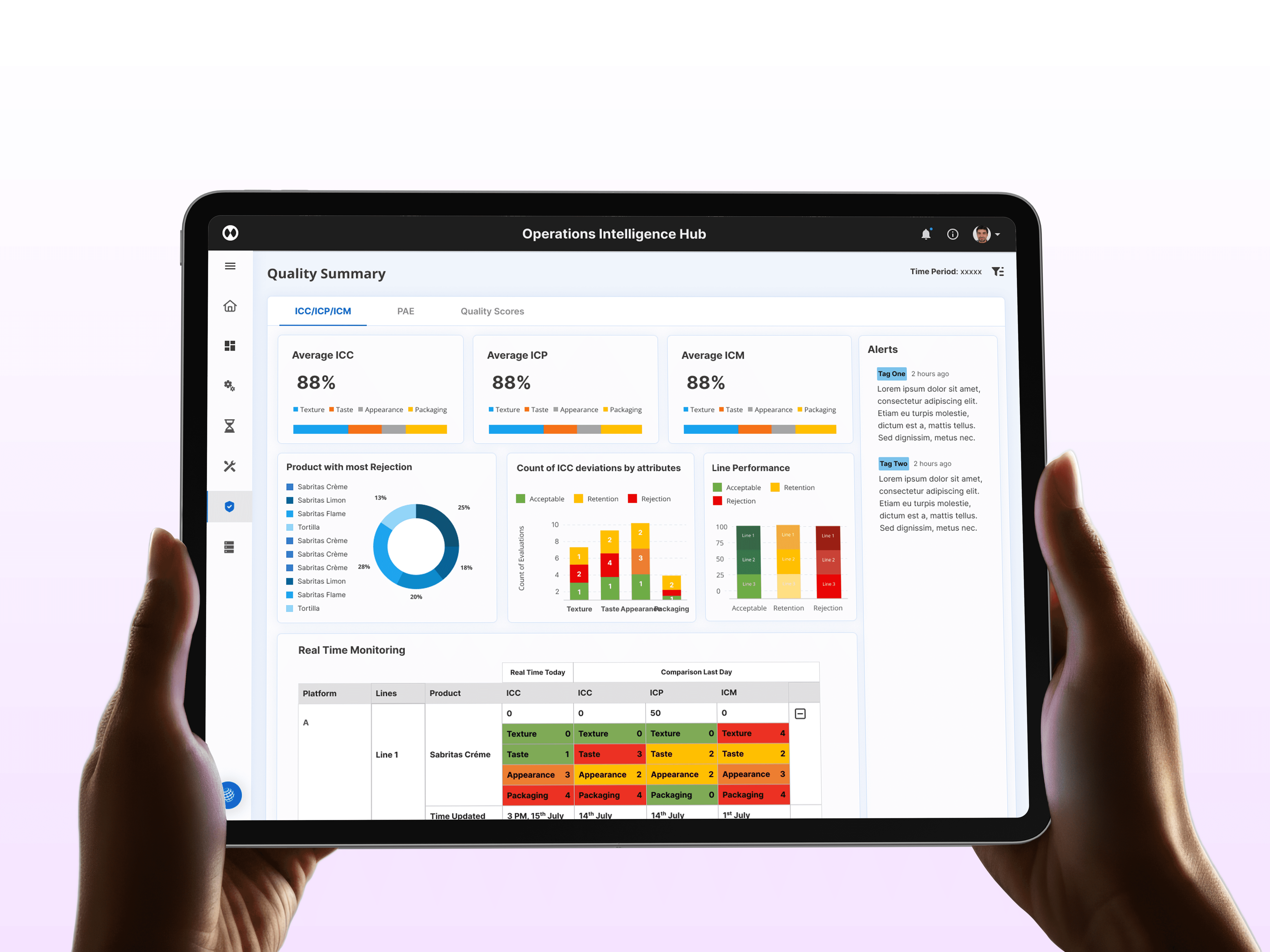
A factory produces 10,000 units daily with 300+ sensors monitoring every metric. Yet operators don't know their efficiency until shift-end, and managers spend hours building reports from six different systems. At a Fortune 100 CPG manufacturer, I designed the Operations Intelligence Hub to collapse these silos into a unified operational intelligence platform. The result: 18% OEE improvement, 52% downtime reduction, and the democratization of manufacturing intelligence across all operational levels.
Problem Statement
Manufacturing operations are data-rich but insight-poor. At a leading CPG manufacturer's flagship facility, critical operational data was trapped in silos, MES (Production), SAP (Maintenance), and proprietary utility systems. Plant managers spent 15% of their week manually compiling Excel reports, while line operators suffered from "alert fatigue," reacting to machine failures only after they occurred.
Contribution
Research, UI/UX Design, Prototypes
Team
Designer, Project Manager, Tech Lead, Consultants
Duration
3 Months
Plenty of data existed, but no clear way to act on it in real time.
Plenty of data existed, but no clear way to act on it in real time.
Plenty of data existed, but no clear way to act on it in real time.
How might we transform fragmented manufacturing data into a single, real-time operational view that helps teams understand what’s happening, why it’s happening, and what to do next without overwhelming them?
How might we transform fragmented manufacturing data into a single, real-time operational view that helps teams understand what’s happening, why it’s happening, and what to do next without overwhelming them?
How might we transform fragmented manufacturing data into a single, real-time operational view that helps teams understand what’s happening, why it’s happening, and what to do next without overwhelming them?
Discovery & Research
Discovery & Research
This wasn’t a problem that could be solved from a desk. While I wasn’t physically embedded at the plant, I led the research direction and synthesis, working closely with on-site consultants who conducted contextual inquiry across shifts. I guided what to observe, what questions to ask, and how insights should be captured, then translated those field findings into clear user needs, workflows, and design principles that informed the product end to end.
This wasn’t a problem that could be solved from a desk. While I wasn’t physically embedded at the plant, I led the research direction and synthesis, working closely with on-site consultants who conducted contextual inquiry across shifts. I guided what to observe, what questions to ask, and how insights should be captured, then translated those field findings into clear user needs, workflows, and design principles that informed the product end to end.
Approach: Contextual Inquiry (Ethnographic Shadowing)
Manufacturing is a "Do What I Say vs. What I Do" environment. Operators cannot articulate their mental models while standing at a control terminal with alarms blaring. Observing their actual behavior revealed gaps between prescribed processes (in training manuals) and actual behavior (what keeps production running).
Approach: Contextual Inquiry (Ethnographic Shadowing)
Manufacturing is a "Do What I Say vs. What I Do" environment. Operators cannot articulate their mental models while standing at a control terminal with alarms blaring. Observing their actual behavior revealed gaps between prescribed processes (in training manuals) and actual behavior (what keeps production running).
Who We Were Designing For
Who We Were Designing For
Line Operator
Line operators work directly on the production floor in noisy, fast-moving environments, often wearing gloves and safety gear. Their attention is split between physical equipment and multiple screens mounted around the line.
Their biggest challenge isn't access to data it's knowing what matters right now. With too many alerts and dashboards, critical issues often surface only after a machine stops.
They think in immediate, binary terms:
Is the line running?
Is it keeping up with the target?
Design focus: Glanceable status, clear prioritization, minimal interpretation.
Line operators work directly on the production floor in noisy, fast-moving environments, often wearing gloves and safety gear. Their attention is split between physical equipment and multiple screens mounted around the line.
Their biggest challenge isn't access to data it's knowing what matters right now. With too many alerts and dashboards, critical issues often surface only after a machine stops.
They think in immediate, binary terms:
Is the line running?
Is it keeping up with the target?
Design focus: Glanceable status, clear prioritization, minimal interpretation.
Line operators work directly on the production floor in noisy, fast-moving environments, often wearing gloves and safety gear. Their attention is split between physical equipment and multiple screens mounted around the line.
Their biggest challenge isn't access to data it's knowing what matters right now. With too many alerts and dashboards, critical issues often surface only after a machine stops.
They think in immediate, binary terms:
Is the line running?
Is it keeping up with the target?
Design focus: Glanceable status, clear prioritization, minimal interpretation.
Plant Manager
Plant managers oversee multiple lines and are accountable for overall plant performance. They typically work from an office but frequently walk the floor to validate issues firsthand.
Their frustration stems from delayed clarity. They often can't tell whether a shift is performing well until reports are generated later, and spend hours manually stitching data together to explain performance changes.
They think in aggregates and trends:
How are lines perfoming relative to each other?
What changed, and why?
Design focus: Unified operational view, trend awareness, and fast drill-down into root causes.
Plant managers oversee multiple lines and are accountable for overall plant performance. They typically work from an office but frequently walk the floor to validate issues firsthand.
Their frustration stems from delayed clarity. They often can't tell whether a shift is performing well until reports are generated later, and spend hours manually stitching data together to explain performance changes.
They think in aggregates and trends:
How are lines perfoming relative to each other?
What changed, and why?
Design focus: Unified operational view, trend awareness, and fast drill-down into root causes.
Plant managers oversee multiple lines and are accountable for overall plant performance. They typically work from an office but frequently walk the floor to validate issues firsthand.
Their frustration stems from delayed clarity. They often can't tell whether a shift is performing well until reports are generated later, and spend hours manually stitching data together to explain performance changes.
They think in aggregates and trends:
How are lines perfoming relative to each other?
What changed, and why?
Design focus: Unified operational view, trend awareness, and fast drill-down into root causes.
Quality Lead
Quality leads are responsible for product quality and compliance, working with high-precision, multi-variable data related to taste, texture, and appearance.
Their challenge is making subjective quality defensible. While they can identify when something is off, connecting quality outcomes to upstream production conditions and communicating that clearly to operations is difficult.
They think in multi-dimensional relationships, not single metrics.
Design focus: Visual comparison against ideal profiles and clear correlation between quality and production data.
Quality leads are responsible for product quality and compliance, working with high-precision, multi-variable data related to taste, texture, and appearance.
Their challenge is making subjective quality defensible. While they can identify when something is off, connecting quality outcomes to upstream production conditions and communicating that clearly to operations is difficult.
They think in multi-dimensional relationships, not single metrics.
Design focus: Visual comparison against ideal profiles and clear correlation between quality and production data.
Quality leads are responsible for product quality and compliance, working with high-precision, multi-variable data related to taste, texture, and appearance.
Their challenge is making subjective quality defensible. While they can identify when something is off, connecting quality outcomes to upstream production conditions and communicating that clearly to operations is difficult.
They think in multi-dimensional relationships, not single metrics.
Design focus: Visual comparison against ideal profiles and clear correlation between quality and production data.
Key Research Insights
Key Research Insights
The "Swivel Chair" Cost: Users were physically moving between terminals to correlate data (e.g., checking Quality terminal to explain a speed drop on MES).
01
Cognitive Tunneling: During high-stress production runs, operators ignored complex data tables. They needed "Glanceable UI."
02
The Shift Handover Gap: Critical tribal knowledge was lost during shift changes (6 AM / 2 PM / 10 PM) because there was no digital log of contextual issues.
03
Defining the Product Structure
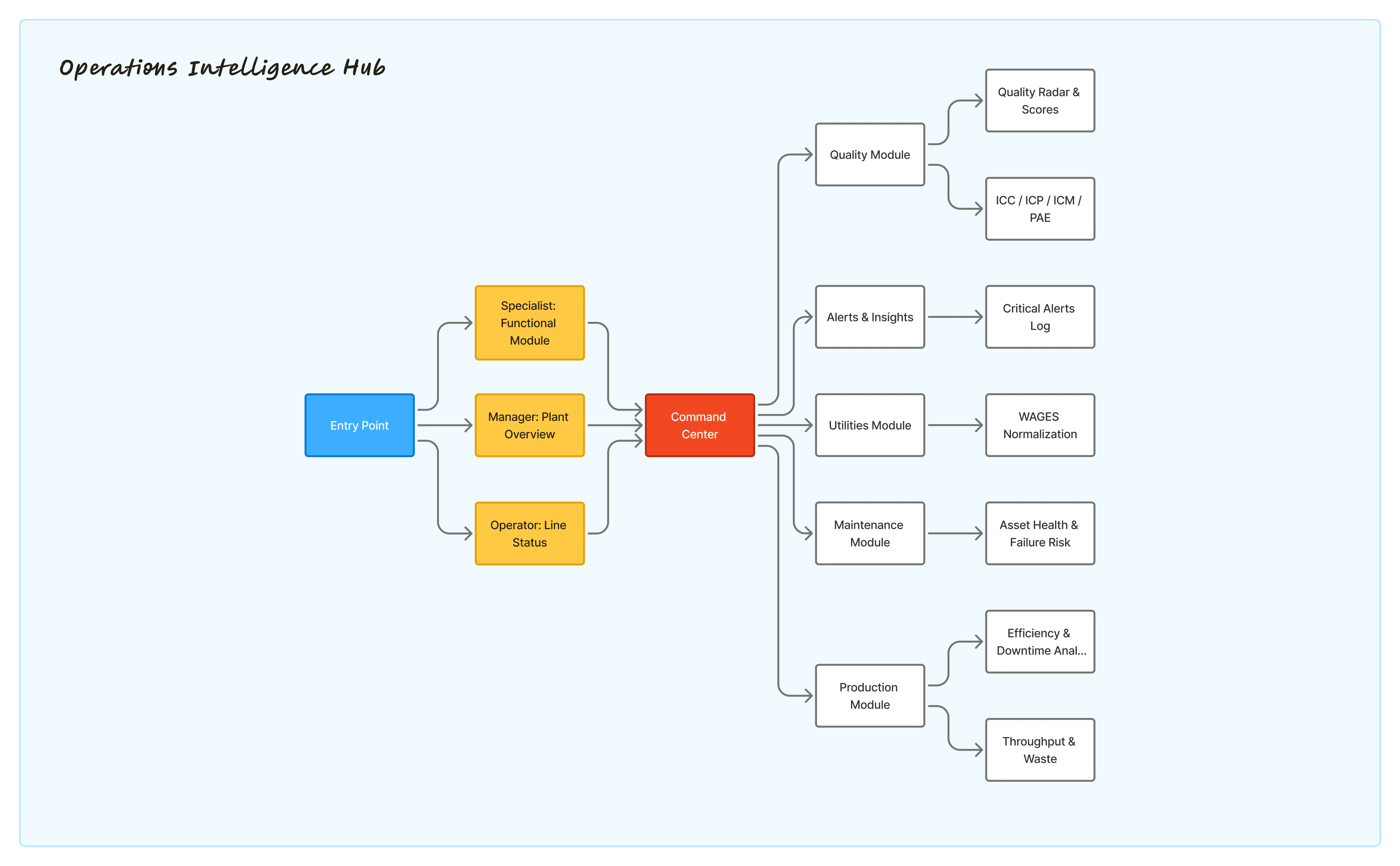
With user roles, mental models, and key insights clearly defined, the next step was to translate these learnings into a coherent product structure. I focused on designing an information architecture that could support multiple roles without fragmenting the experience giving each user a clear starting point while maintaining a shared operational truth.
The resulting IA follows a progressive, hierarchical model, allowing users to move seamlessly from high-level awareness to detailed root-cause analysis. Each level was intentionally designed to reduce cognitive load, preserve context, and align with how manufacturing teams actually think and operate.
With user roles, mental models, and key insights clearly defined, the next step was to translate these learnings into a coherent product structure. I focused on designing an information architecture that could support multiple roles without fragmenting the experience giving each user a clear starting point while maintaining a shared operational truth.
The resulting IA follows a progressive, hierarchical model, allowing users to move seamlessly from high-level awareness to detailed root-cause analysis. Each level was intentionally designed to reduce cognitive load, preserve context, and align with how manufacturing teams actually think and operate.
Design Principles
Design Principles
Decision filters that guided every design choice
Decision filters that guided every design choice
Decision filters that guided every design choice
1.
1.
One Source of Truth, Multiple Expressions
One Source of Truth, Multiple Expressions
There must be a single, reconciled reality of what happened on the factory floor. While information may be expressed differently for operators, managers, or specialists, the underlying data must always align.
Design impilication: If two roles see different numbers for the same moment, the design has failed-regardless of visual polish.
There must be a single, reconciled reality of what happened on the factory floor. While information may be expressed differently for operators, managers, or specialists, the underlying data must always align.
Design impilication: If two roles see different numbers for the same moment, the design has failed-regardless of visual polish.
There must be a single, reconciled reality of what happened on the factory floor. While information may be expressed differently for operators, managers, or specialists, the underlying data must always align.
Design impilication: If two roles see different numbers for the same moment, the design has failed-regardless of visual polish.
2.
2.
Optimize for Decision Speed, Not Data Density
Optimize for Decision Speed, Not Data Density
When faced with a trade-off between completeness and clarity, the interface must favor faster understanding over showing more data. Every screen must first make it clear whether attention is required, where it is needed, and how urgent the situation is.
Design impilication: The default experience prioritizes actionability; depth is revealed progressively.
When faced with a trade-off between completeness and clarity, the interface must favor faster understanding over showing more data. Every screen must first make it clear whether attention is required, where it is needed, and how urgent the situation is.
Design impilication: The default experience prioritizes actionability; depth is revealed progressively.
When faced with a trade-off between completeness and clarity, the interface must favor faster understanding over showing more data. Every screen must first make it clear whether attention is required, where it is needed, and how urgent the situation is.
Design impilication: The default experience prioritizes actionability; depth is revealed progressively.
3.
3.
Context is Part of the Interface
Context is Part of the Interface
The operational context, including plant, line, shift, product, and time range, is not metadata. It is core information and must remain visible and consistent across the product.
Design impilication: Context is persistent, not buried in filters or headers that disappear during navigation.
The operational context, including plant, line, shift, product, and time range, is not metadata. It is core information and must remain visible and consistent across the product.
Design impilication: Context is persistent, not buried in filters or headers that disappear during navigation.
The operational context, including plant, line, shift, product, and time range, is not metadata. It is core information and must remain visible and consistent across the product.
Design impilication: Context is persistent, not buried in filters or headers that disappear during navigation.
4.
4.
Predictions Must Be Interpretable, Not Impressive
Predictions Must Be Interpretable, Not Impressive
Detailed diagnostics should be revealed only after the user understands whether attention is required, where to focus, and how urgent the issue is.
Design impilication: No black-box AI. If a prediction can't be explained, it shouldn't be shown.
Detailed diagnostics should be revealed only after the user understands whether attention is required, where to focus, and how urgent the issue is.
Design impilication: No black-box AI. If a prediction can't be explained, it shouldn't be shown.
Detailed diagnostics should be revealed only after the user understands whether attention is required, where to focus, and how urgent the issue is.
Design impilication: No black-box AI. If a prediction can't be explained, it shouldn't be shown.
5.
5.
Design For Interruption
Design For Interruption
Manufacturing workflows are non-linear and frequently interrupted by alarms, calls, and floor issues. The interface must assume users will leave and return mid-task.
Design impilication: The interface preserves state across navigation, allows users to resume tasks instantly, and avoids long, blocking modal flows.
Manufacturing workflows are non-linear and frequently interrupted by alarms, calls, and floor issues. The interface must assume users will leave and return mid-task.
Design impilication: The interface preserves state across navigation, allows users to resume tasks instantly, and avoids long, blocking modal flows.
Manufacturing workflows are non-linear and frequently interrupted by alarms, calls, and floor issues. The interface must assume users will leave and return mid-task.
Design impilication: The interface preserves state across navigation, allows users to resume tasks instantly, and avoids long, blocking modal flows.
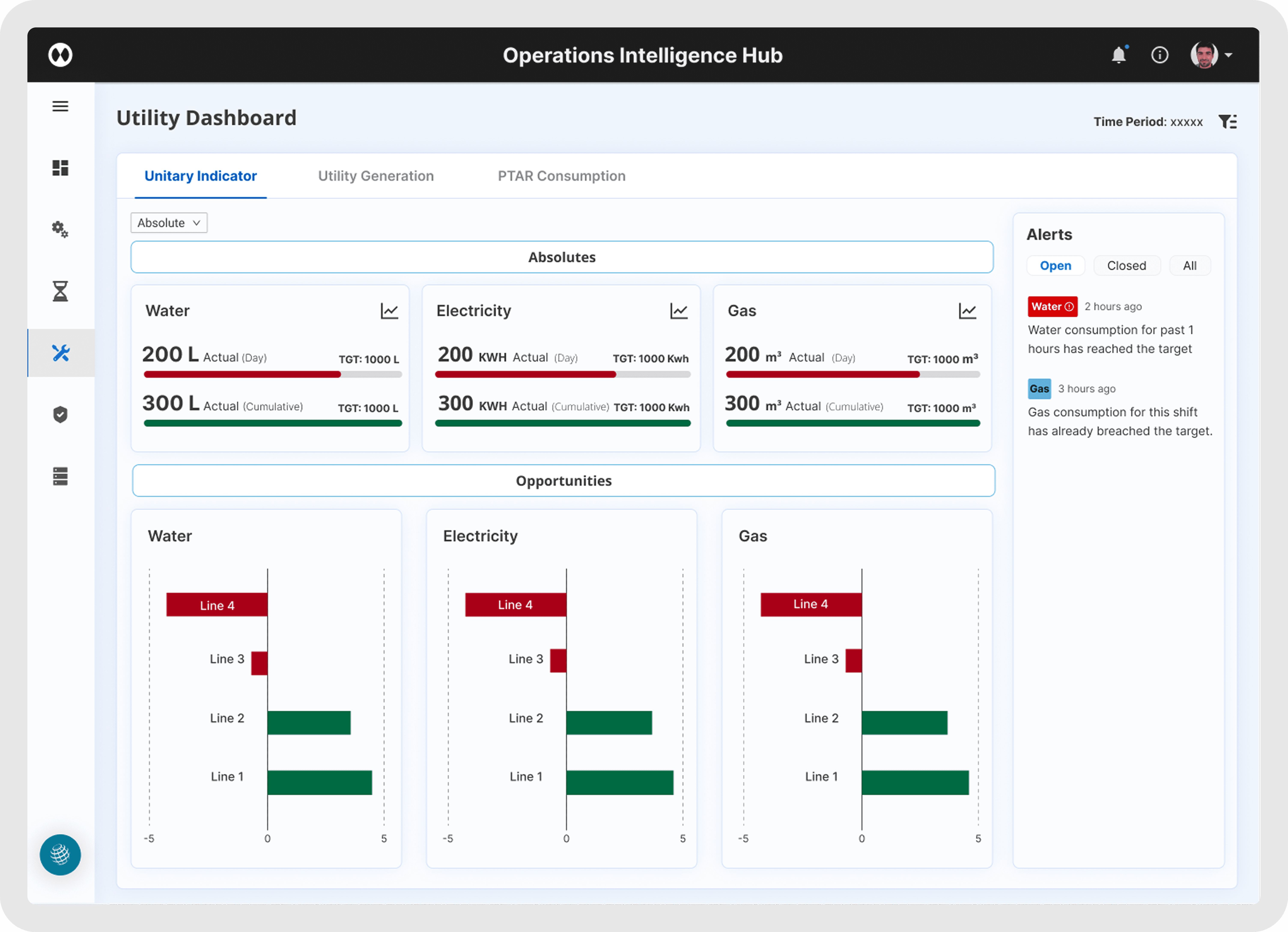
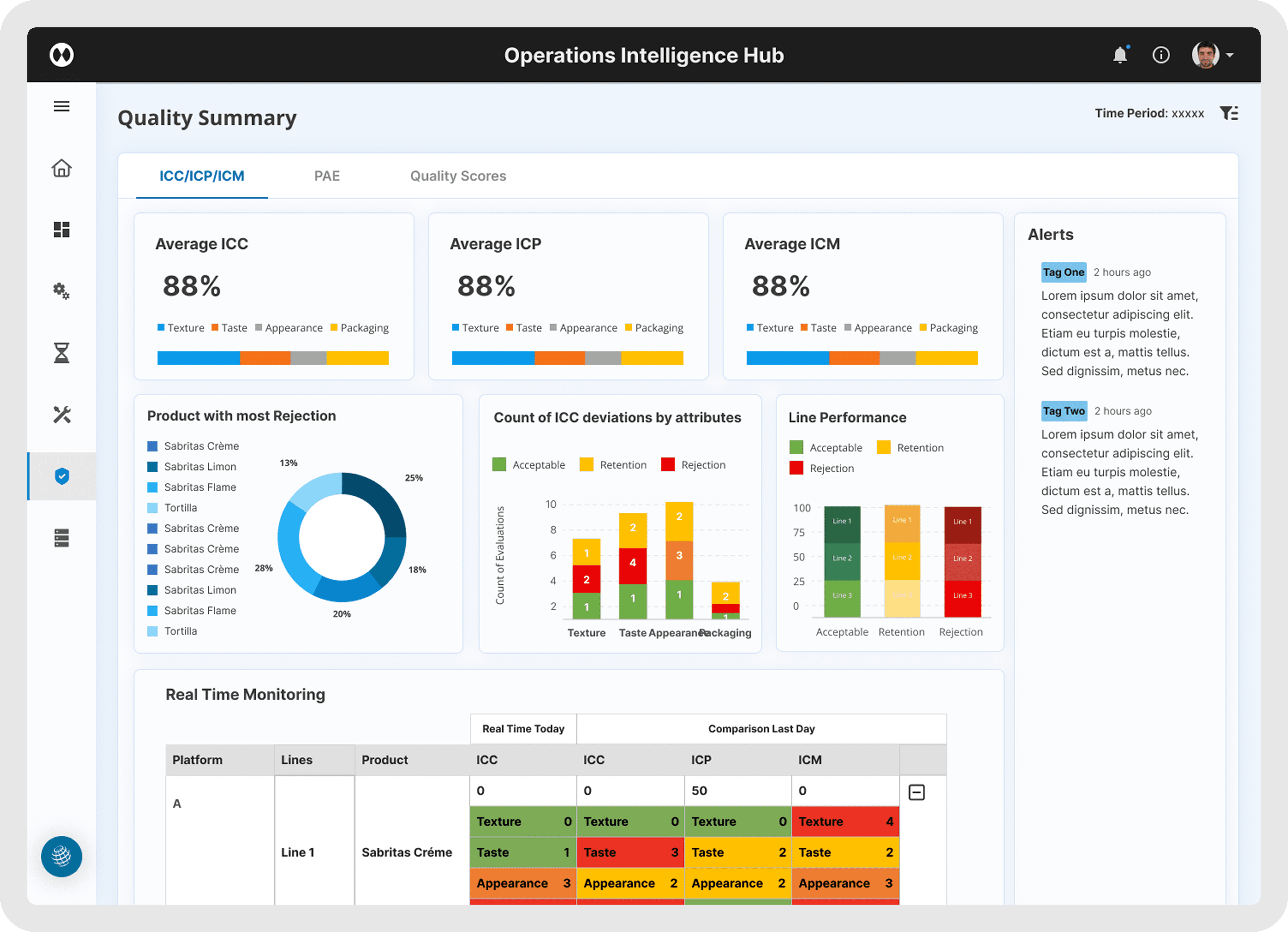
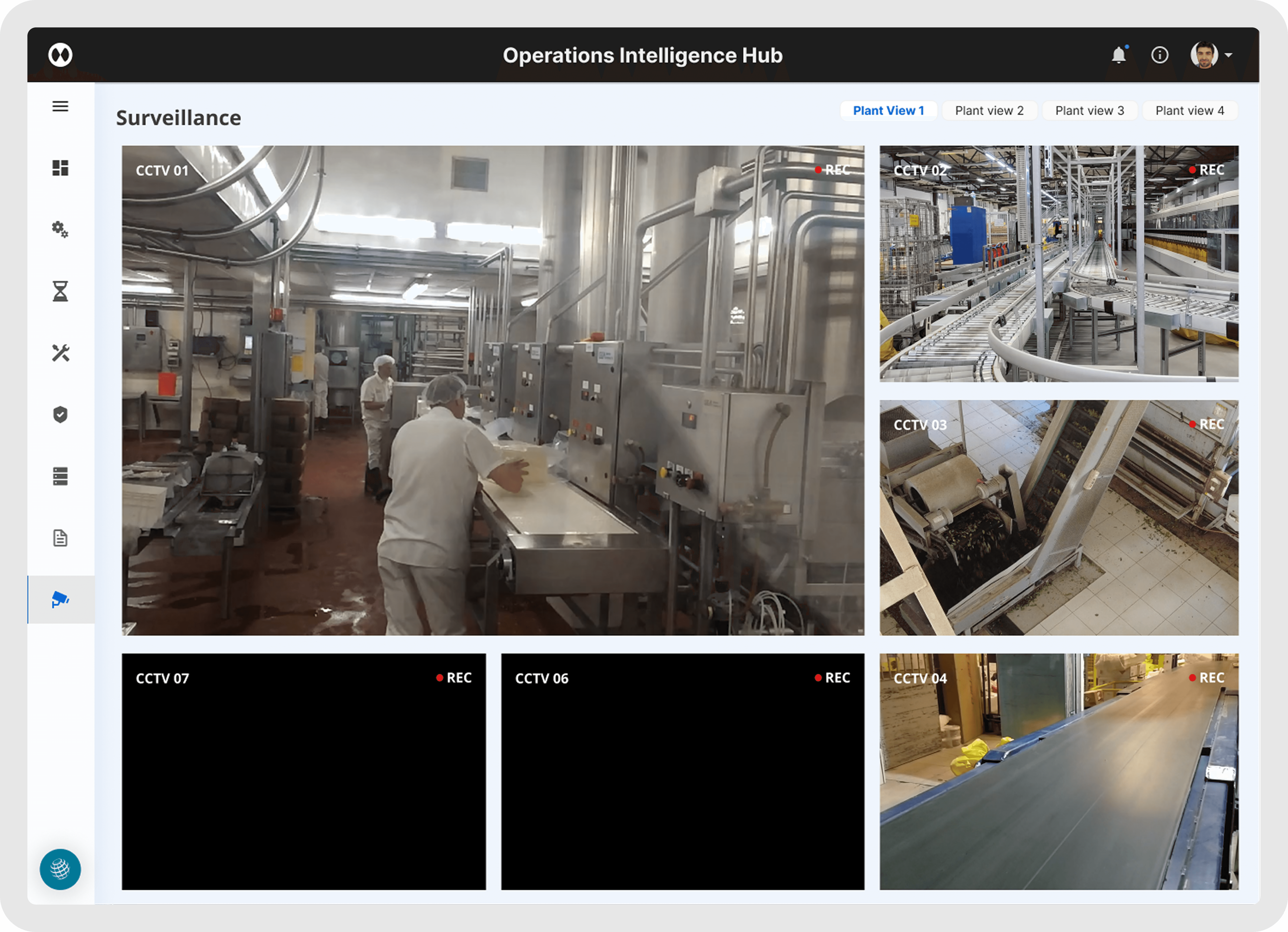
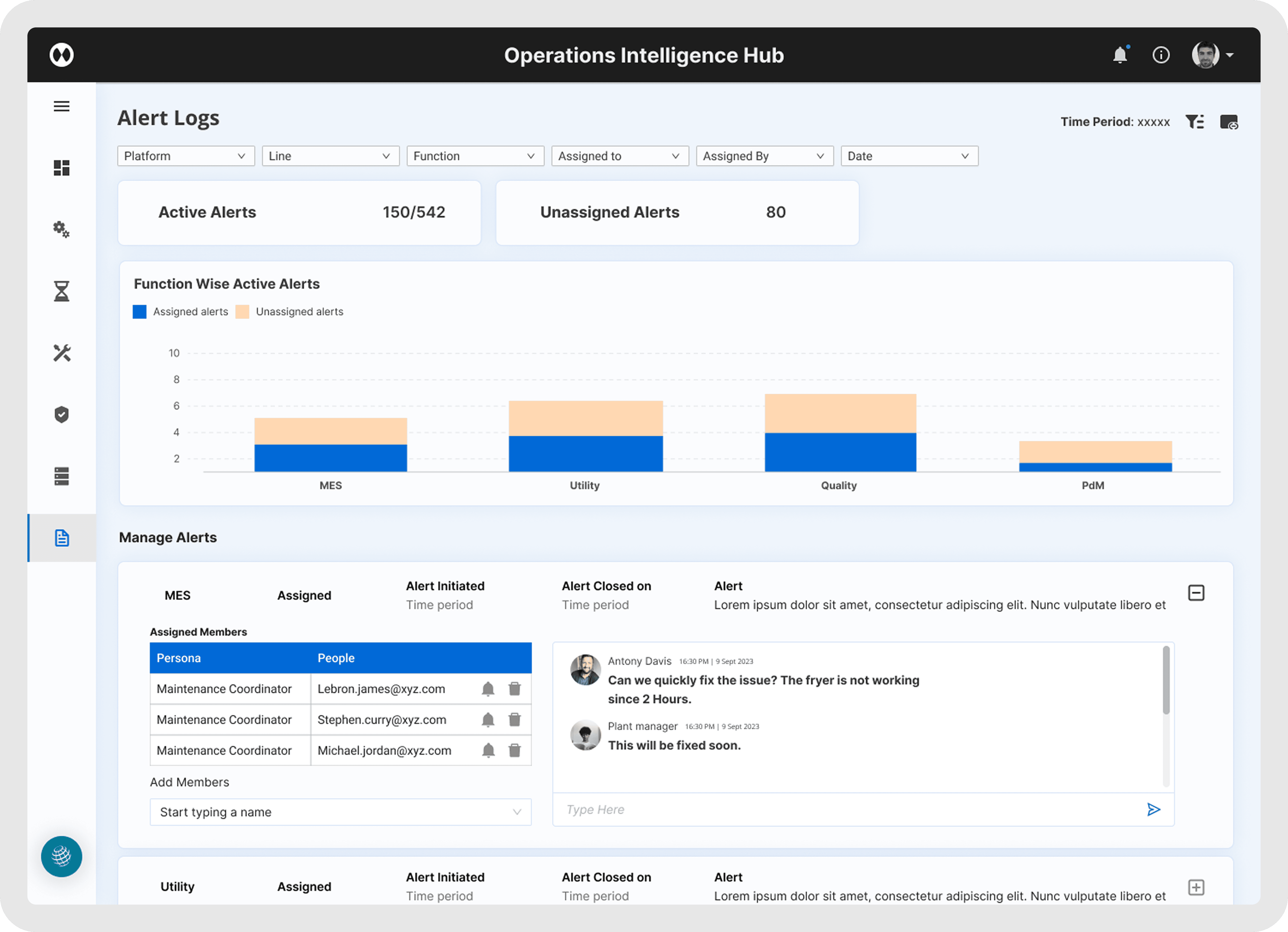
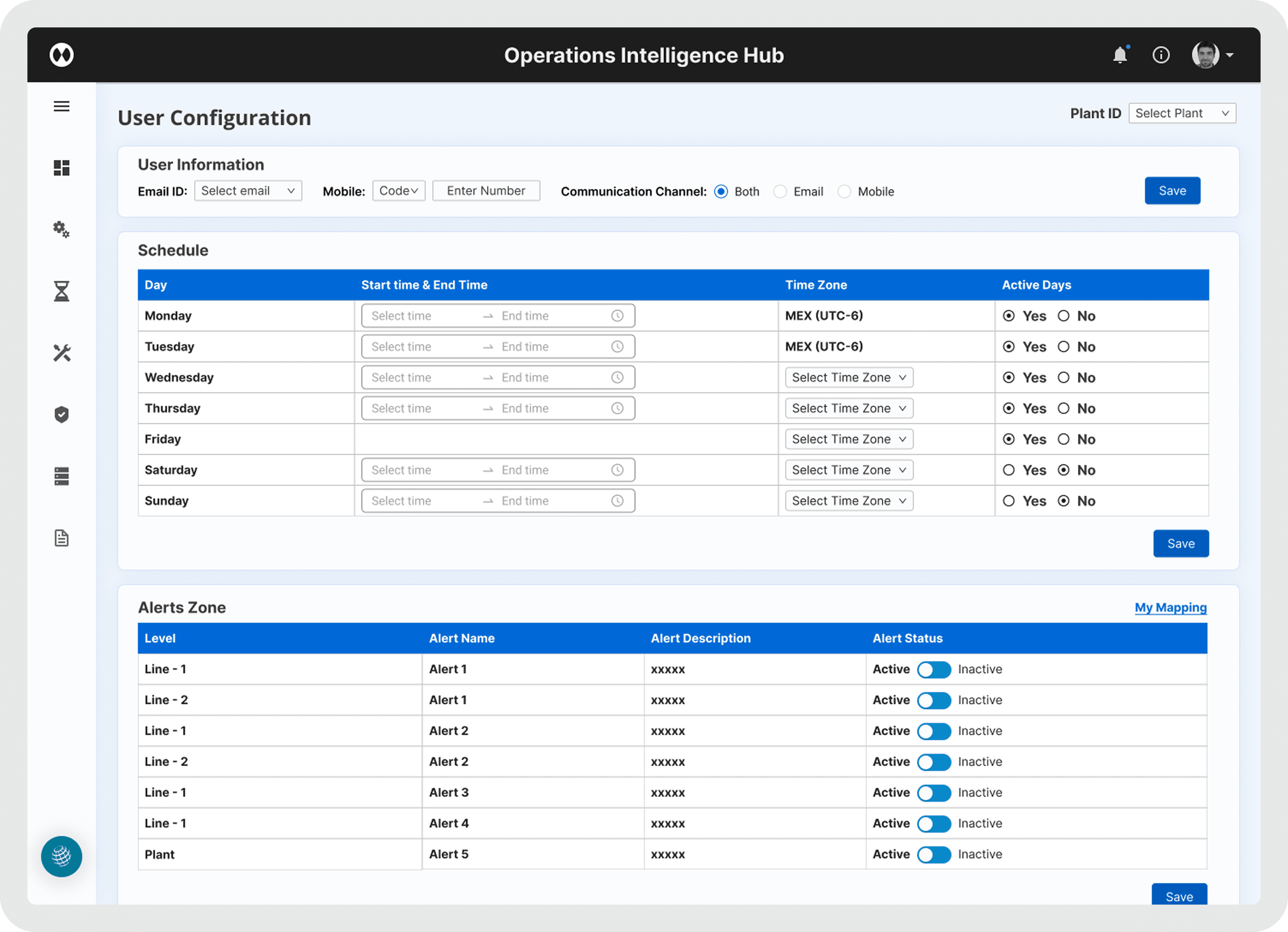
Dashboard Interface Designs
Dashboard Interface Designs

I doodle in deadlines
I doodle in deadlines
I doodle in deadlines
Got coffee? Let’s talk